 Miami Magic
There were 27 houses in the middle of the sea and 6 are left: the story of Stiltsville, the bay’s neighborhood with no streets
It was born in 1933 with a bait shack, had clubs and raids, and survived the hurricanes and the order to remove it.
By Yolaxys Alvarez ·
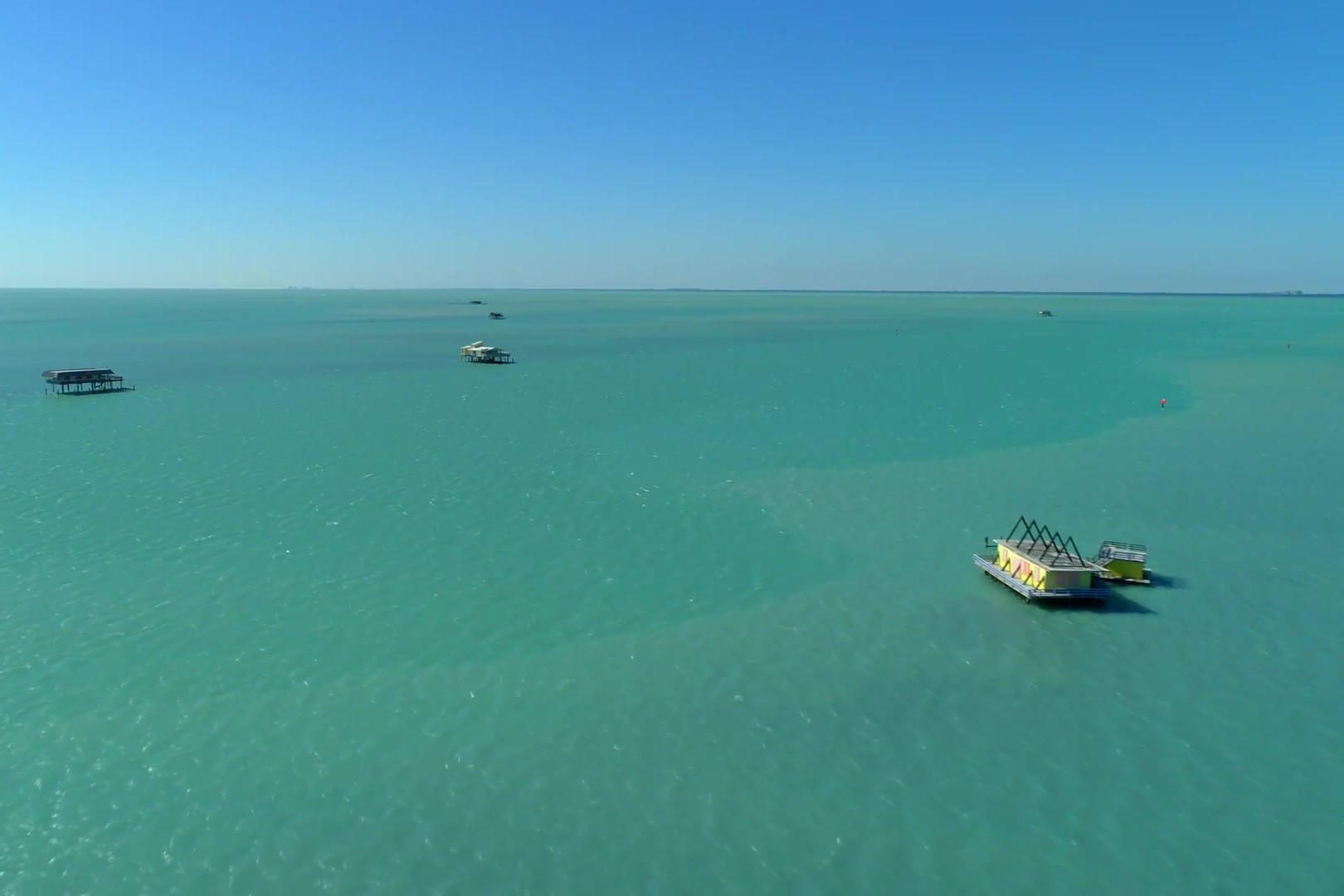
- The houses belong to Biscayne National Park: stepping onto them without a permit is prohibited.
- You can see them up close on the guided boat tour that leaves from Dinner Key, in Coconut Grove.
- From the Key Biscayne lighthouse they can be made out on clear days.
Six houses still stand over the water, a mile off the tip of Key Biscayne, where there were once 27. They are what is left of Stiltsville, a neighborhood with no streets and no neighbors that can only be reached by boat and now belongs to Biscayne National Park. No one may step onto them without a permit, the National Park Service warns.
Bait, beer and chowder
It began in the 1930s with “Crawfish” Eddie Walker, who built the first shack on stilts on the bay’s shallow flats. Accounts from the period, gathered in the Stiltsville timeline, date that shack to 1933, at the end of Prohibition: Walker sold bait and beer and served a chowder made from the crawfish he caught under his own house.
His fishing companions followed, and in 1939 so did Jimmy Ellenburg, known as the place’s unofficial mayor.
The clubs
The first was the Calvert Club, in the late 1930s. In November 1940 came the Quarterdeck Club, built on a barge, with a bar, a dining room and a dock for yachts; Life magazine ran a feature on it on Feb. 10, 1941, and made it one of Miami’s places to be. Gambling rumors led to a raid in 1949, which found no evidence. The club burned down to its pilings in 1961.
The best remembered lasted three years. In 1962, a businessman ran a 150-foot yacht, the Jeff, aground and opened it as the Bikini Club, where women in bikinis drank free. In the summer of 1965 the state shut it down for selling liquor without a license.
Hurricanes, fires and a deadline
Stiltsville peaked in 1960, with 27 structures. That same year Hurricane Donna damaged most of them, and Betsy wiped out nearly everything in September 1965. Florida then began charging rent for each plot of water, stopped issuing building permits and set a rule that still applies: a house that loses more than half is not rebuilt. In 1976 it put an end date on the leases, July 1, 1999.
By then the place was already a national park. Congress added it in 1980 and the state deeded the bay bottom in 1985. Hurricane Andrew, in 1992, left only seven houses standing, none of them from the heyday.
Miami said no
As the removal deadline approached, a petition drive gathered more than 75,000 signatures. The Park Service reversed course in 2000, and in 2003 the Stiltsville Trust was born, the nonprofit that looks after the houses alongside the park. A fire destroyed one more, the Leshaw House, on Jan. 11, 2021.
Is any club left?
One. Among the six houses is the Miami Springs Power Boat Club’s, which its members built in the late 1950s on a sunken barge bought for $1 and moved onto concrete pilings after Hurricane Betsy. The other five are the A-Frame, the Baldwin, Sessions & Shaw, the Bay Chateau, the Hicks and the Jimmy Ellenburg houses. The Miami Beach Rod & Reel Club, which held its first official outing at the Calvert Club in 1938, is no longer in operation, according to the Museum of Florida History.
On screen
The houses appear in films such as Absence of Malice and Bad Boys II. Also in a video game: Grand Theft Auto: Vice City, from 2002. Its successor, GTA VI, went on sale Thursday, Nov. 19.
How to see them
The Biscayne National Park Institute runs a guided boat tour that leaves from Dinner Key, in Coconut Grove, and circles the houses. From land they can be made out, on clear days, from the Key Biscayne lighthouse. Permits to visit them go through the Stiltsville Trust and the park, which explains the process on its permits page.