 Miami Magic
The Key Biscayne lighthouse and the 1836 night its keeper blew up the gunpowder so ships would see him
190 years ago, an attack left one man alone atop a burning tower. This is the story of Cape Florida Lighthouse, and of the route to freedom its light made more dangerous.
By Yolaxys Alvarez ·
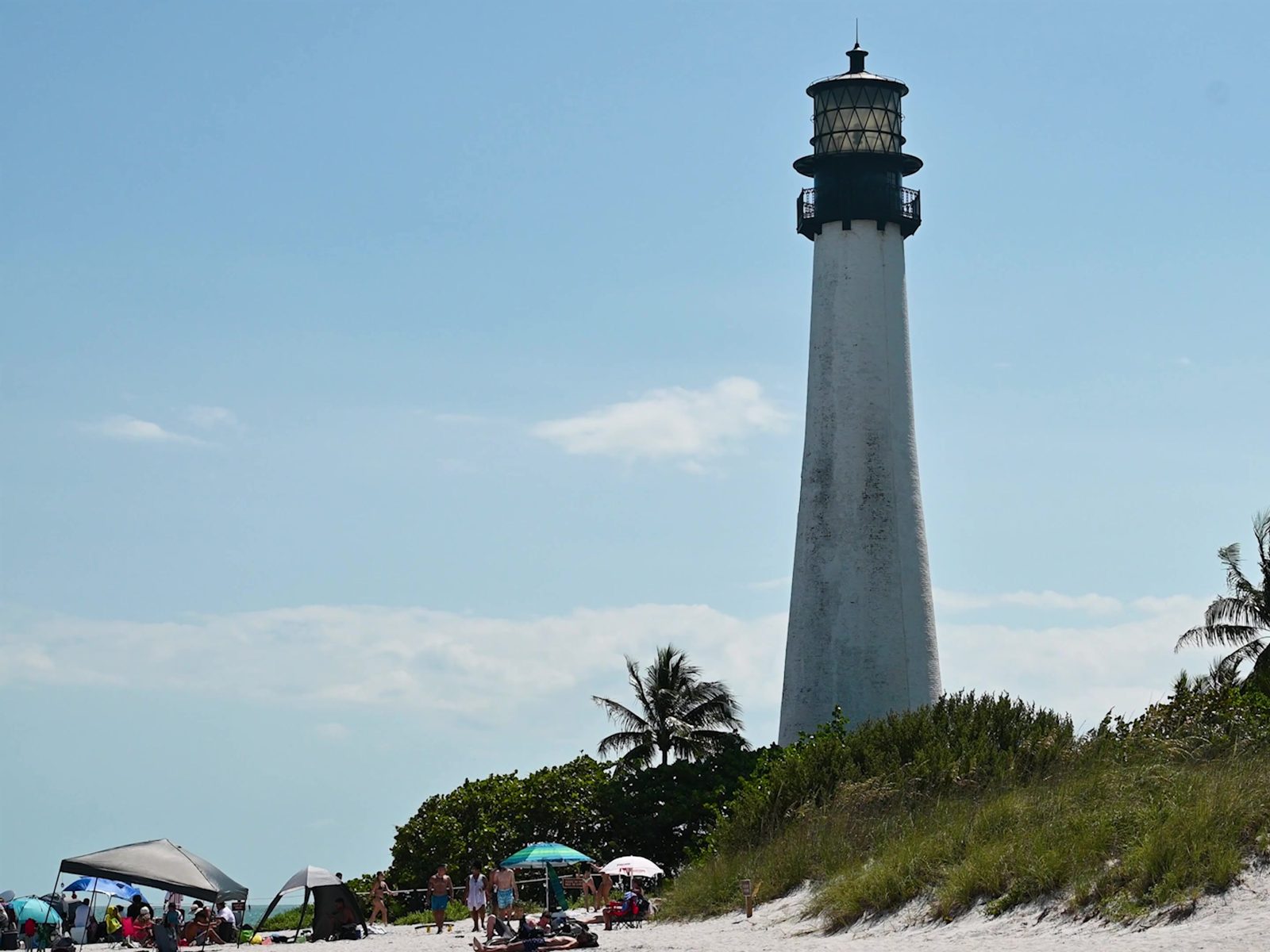
- Guided climbs run Thursday through Monday at 10 AM and 1 PM, according to Florida State Parks. No climbs on Tuesday and Wednesday.
- You must be at least 42 inches tall to climb the stairs.
- The lighthouse is inside Bill Baggs Cape Florida State Park: park entry is paid per vehicle, and the tour is included.
On July 23, 1836, Cape Florida's head keeper, John Dubose, was in Key West with his family. At the southern tip of Key Biscayne, two men remained: his assistant, John W. B. Thompson, and Aaron Carter, who worked with him. That afternoon, in the middle of the Second Seminole War, a group of Seminoles reached the tower.
Thompson and Carter managed to lock themselves in. The attackers set the door on fire, and lamp oil leaking from tanks pierced by gunfire fed the flames, according to the account gathered by Lighthouse Friends. The two men climbed to the top with muskets and a keg of gunpowder.
Fire and shattering lantern glass drove them onto the balcony, an iron ledge barely two feet wide. Carter was killed there. Thompson, wounded and with his clothes burning, threw the keg into the flames. The blast did not kill him: it brought down the burning staircase and left him half-conscious at the top. The attackers took him for dead, looted the keeper's house and left.
The next day, a line arrived from the sea
A Navy vessel heard the explosion. The next day its sailors found Thompson still up there. The captain fired a line to him with a musket; Thompson used it to haul up a heavier rope, and two seamen climbed it to bring him down. Thompson wrote his own account, now kept by the Coast Guard.
He was taken to Key West and then to Charleston to recover. The lighthouse stayed dark for ten years.
Long before, that cape was a door to freedom
There, at the tip of Key Biscayne, enslaved people fleeing the South, and the Seminoles who sheltered them, waited for boats to carry them to the British Bahamas, where they would be free. That route is known as the Saltwater Railroad, and the lighthouse, by lighting up the coast at night, made it more dangerous. In 2004, Cape Florida was designated a National Underground Railroad Network to Freedom site, according to the Florida State Parks brochure reproduced on the site's historical marker.
After the fire, the tower grew taller
Rebuilt with iron stairs, the tower shone again in 1847. In 1855 it was raised to 95 feet and fitted with a new Fresnel lens on the recommendation of Lt. George G. Meade, the same man who would later command the Union army at Gettysburg.
In August 1861, during the Civil War, Southern sympathizers removed the lamp and smashed the lens prisms so it could not guide Union ships. It was relit in 1866. On June 15, 1878, it went dark for good, replaced by the offshore Fowey Rocks Lighthouse. Exactly one hundred years later, on July 4, 1978, it was lit again. Hurricane Andrew damaged it in 1992, and the state repaired it in time for Miami's centennial in 1996.
Today you can climb to where Thompson waited
The lighthouse is part of Bill Baggs Cape Florida State Park, and Florida State Parks describes it as the oldest structure in Miami-Dade. The climb winds up a narrow spiral staircase to a balcony with views of the bay, the Atlantic and, on clear days, the houses of Stiltsville standing over the water.
Up there, the same wind blows as on that night in 1836.