 Miami Magic
Fewer than 50 were once left: the deer that lives only in the Keys, and how to see it without harming it
The Key deer is the smallest in North America and lives only between Big Pine Key and Sugarloaf Key. There are 700 to 800 today, the state wildlife agency says, and cars are what kills them most.
By Yolaxys Alvarez ·
- Feeding, touching or chasing them is prohibited in the refuge.
- They are best seen at dawn and dusk, on Big Pine Key and south to Lower Sugarloaf Key.
- The refuge’s Nature Center is open Wednesday through Saturday, 10 a.m. to 3 p.m.: 30587 Overseas Highway, Big Pine Key.
- Report an injured deer at 888-404-3922.
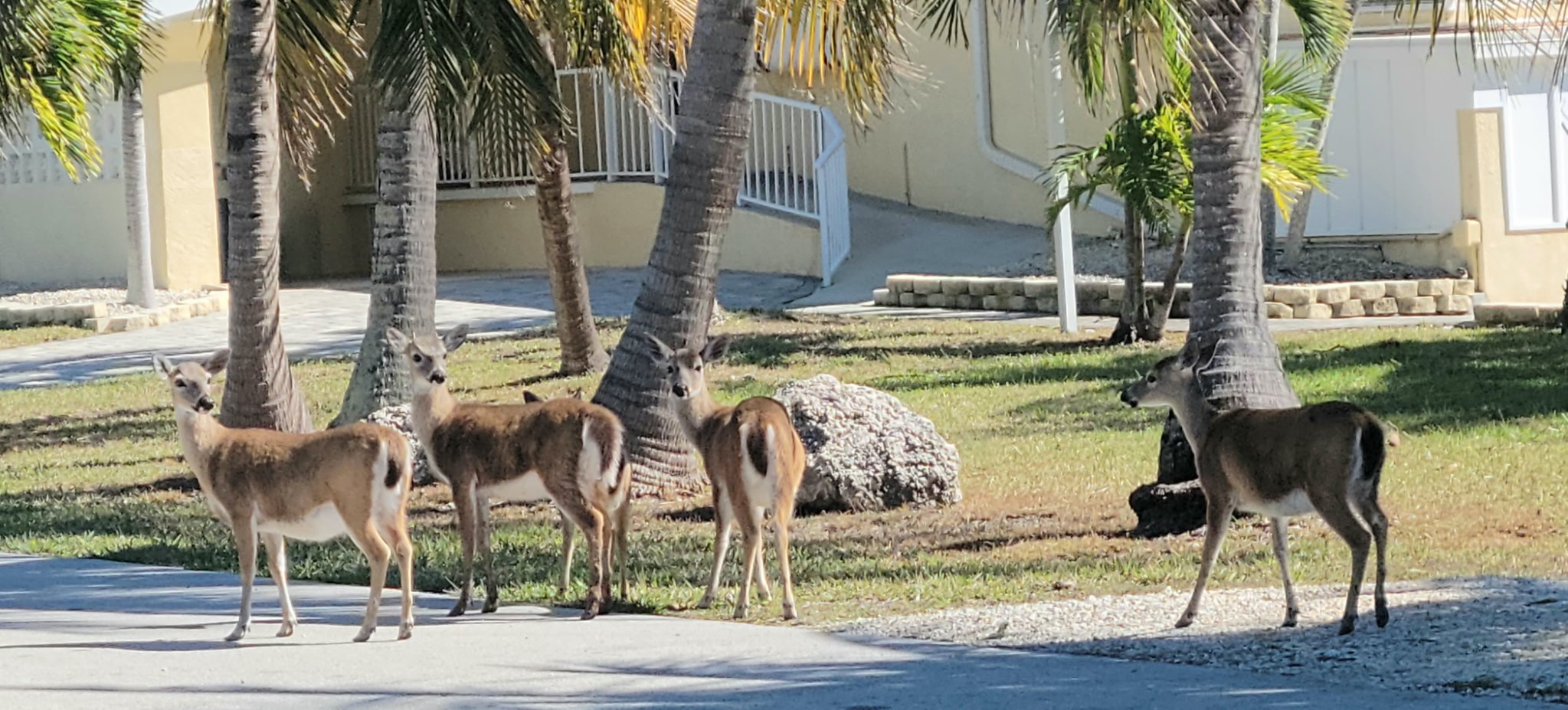
They walk through yards, cross the street in no hurry and stare at whoever goes by. On Big Pine Key, the Key deer is just another neighbor, and it is an animal that exists nowhere else in the world.
A deer in miniature
It is the smallest subspecies of North American white-tailed deer. An adult stands 25 to 30 inches at the shoulder and weighs 45 to 75 pounds, according to the U.S. Fish and Wildlife Service. It lives on about 25 islands, from Big Pine Key to Sugarloaf Key, and swims from one to another.
From fewer than 50 to several hundred
Hunting and habitat loss pushed it to the edge of extinction: fewer than 50 were left in the 1940s, the Florida Fish and Wildlife Conservation Commission (FWC) notes. Hunting was then banned, the National Key Deer Refuge was created in 1957 and the deer was listed as endangered in 1967.
Today the FWC estimates 700 to 800 animals, most of them on Big Pine Key and No Name Key. The population is considered stable, but the deer remains endangered.
What kills them most
Vehicle collisions are now their leading cause of death, the FWC says. The refuge asks drivers to take care from Big Pine Key to Lower Sugarloaf Key and to obey the posted speed limits.
Feeding them is illegal and harms them. According to the same agency, it takes away their fear of people and concentrates them in one spot, which spreads parasites and disease. That is why they walk up to people and cars: they are looking for a handout.
The neighbors who look after them
On Big Pine Key people know them one by one. They are part of the neighborhood, and it showed in 2016, when a screwworm outbreak killed 135 deer, more than a tenth of the herd.
Several hundred volunteers joined the biologists to save them, according to The Wildlife Society, the professional association of wildlife biologists: they learned to hand-feed them medicated food, the one exception to the no-feeding rule, and called the refuge hotline whenever they saw an injured animal. The outbreak was declared eradicated in March 2017.
Island residents have said they give names to the ones that visit their yards and leave water out for them when it runs short. The refuge, however, asks people to give them nothing: no food and no reason to come close to homes and the road.
That affection has a way of showing itself without harming them: drive slowly, don’t feed them and report any that is hurt.
Where to see them
The refuge recommends starting at its Nature Center, just before the only traffic light on Big Pine Key for anyone arriving from Miami. From there you can head to the Blue Hole, an observation platform three miles north of US 1 on Key Deer Boulevard, and to the Watson and Mannillo trails, a quarter mile farther on.
You won’t have to look hard: they roam freely across refuge lands and through the neighborhood.