 Miami Magic
The national park next door to Miami that almost no one sets foot in
Biscayne charges no entrance fee and is 95% water: reefs, mangroves, shipwrecks and a 1930s lighthouse on a key you can only reach by boat.
By Yolaxys Alvarez ·
- The park has no entrance fee. The Dante Fascell Visitor Center, at 9700 SW 328th Street in Homestead, is open daily from 9 a.m. to 5 p.m.
- No boat? Tours leave from the visitor center itself with the Biscayne National Park Institute: 786-335-3644. Advance reservations are advised.
- With your own boat: day-use docking at Boca Chita or Elliott Key costs $25 Friday through Monday and on federal holidays. You pay through the Recreation.gov app, which must be downloaded before you go.
- Boca Chita has no drinking water or electricity, pets are not allowed and mosquitoes are present year-round. Bring repellent and pack out your trash.
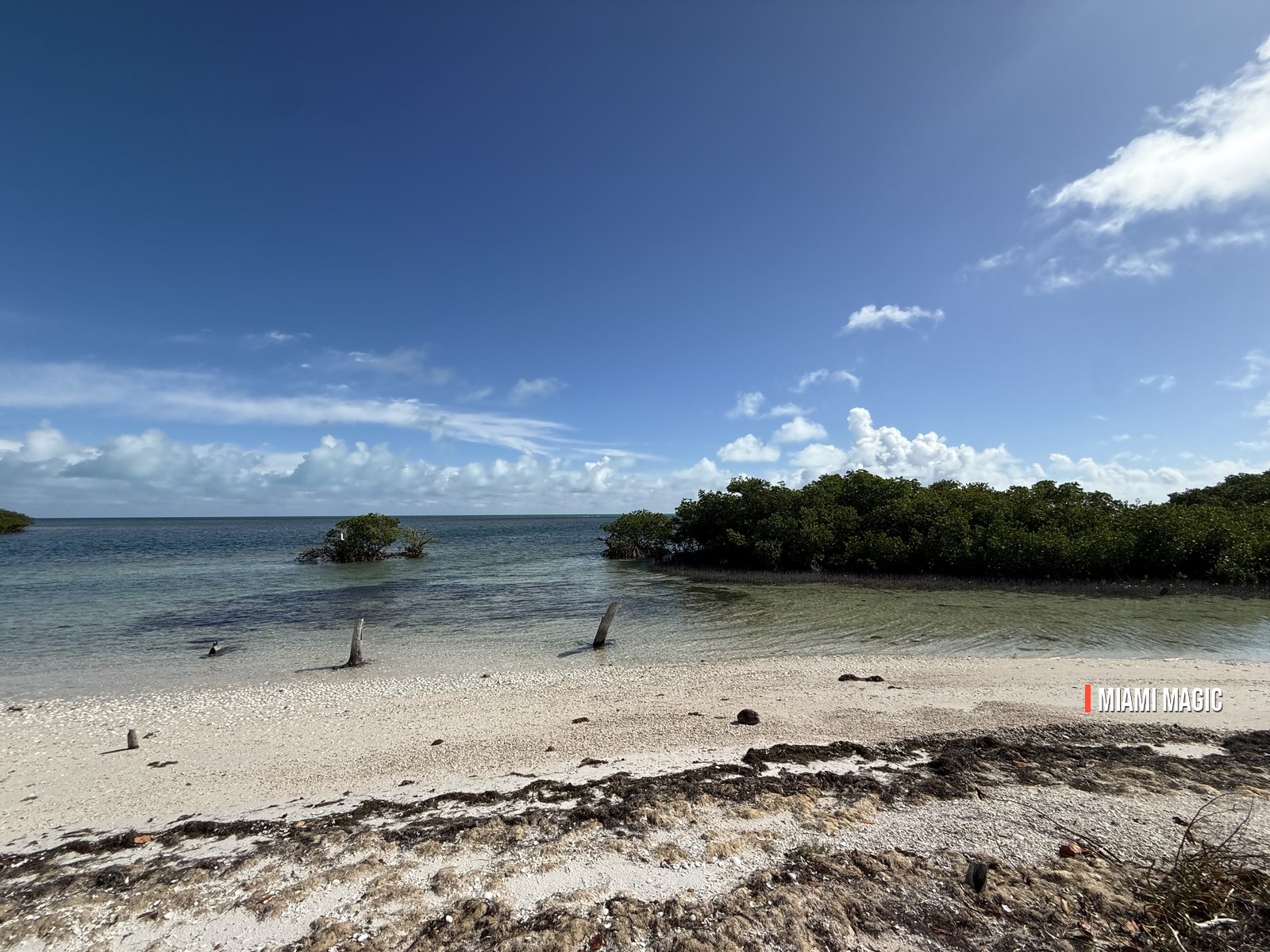
Less than an hour from Miami, at the end of a straight road through Homestead's plant nurseries, begins a national park with almost no land to walk on. Biscayne is 95% water. The rest is mangroves and the northernmost keys of the Florida chain.
Arrive by car and you stay at Convoy Point, the only mainland section. That's where the visitor center is, along with a green space facing the bay and the launch for kayaks and canoes, open from 7 a.m. to 5:30 p.m. Paddling close to shore, among mangroves and shallow water, is the simplest way to understand the place.
The rest of the park requires a boat. The most visited spot is Boca Chita Key, with its 65-foot ornamental lighthouse, built in the 1930s by businessman Mark Honeywell. The observation deck looks out over the keys, the bay, the ocean and, in the distance, the Miami skyline. If park staff are on the island, they may open it. A half-mile trail runs to the key's southern end.
Underwater is everything else: coral reefs and the shipwrecks of the Maritime Heritage Trail, which guided trips visit with mask and snorkel. There are also sailing trips on the bay and outings to Jones Lagoon, a still-water lagoon few people ever see. Other authorized operators run sightseeing trips to Stiltsville, the stilt houses at the park's northern edge.
Beyond corals and mangroves, the park protects 10,000 years of human history. With November's cooler air and fewer afternoon storms, it's a good time to get to know it.