 Miami Magic
Larry and Penny Thompson: pinelands, a lake and mangoes in South Miami-Dade
Next to Zoo Miami survives a pineland that has nearly vanished from the county, with a 22-acre lake, a fruit grove and the largest campground in Miami-Dade.
By Yolaxys Alvarez ·
- It's at 12451 SW 184 St, next to Zoo Miami.
- In high season, Nov. 1 to March 31, an RV site costs $80 a night, $470 a week or $1,350 a month, plus tax. Tent sites are $25 a night, and check-in is only during office hours, 9:00 to 5:00.
- Call 305-232-1049 before you go to confirm availability.
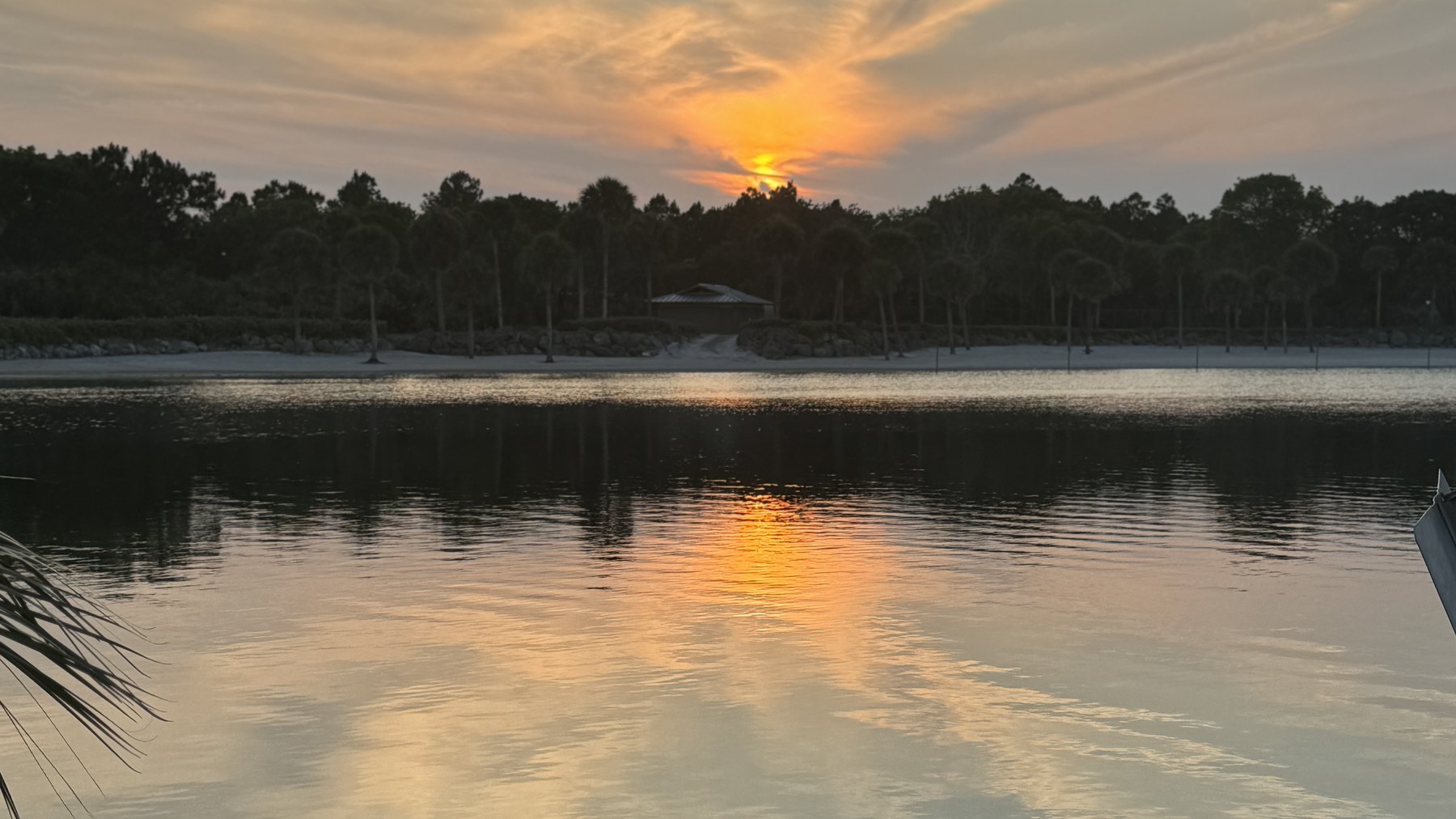
Since Nov. 1, the Larry and Penny Thompson campground has been in high season: snowbirds arrive and cool mornings return to South Miami-Dade. Next to Zoo Miami, the park holds 270 acres of woodland, a 22-acre lake and the largest campground in the county.
Much of that woodland is pine rockland, the ecosystem that grows on South Florida's limestone, with less than 2% left in urban Miami-Dade, according to Fairchild Tropical Botanic Garden. It's ruled by the Dade County pine, with its flaky bark, and the saw palmetto, its green fans close to the ground. Wildflowers peek out in between.
In these pines, it pays to look up. Cardinals perch on dry branches, red-bellied woodpeckers tap the trunks and hawks keep watch from the treetops. By the lake, Muscovy ducks stroll the grass unbothered by people. Fall also brings migrating birds: on a single November morning in 2024, the Tropical Audubon Society counted 46 species, nine of them warblers.
For nearby residents it's an open-air gym. Many come early to walk or run on flat trails, and there are bike and horse trails too. Every fall its cross country course hosts school meets such as the Larry Wooten Invitational and the Sam Burley Middle School Invitational, and it has hosted the Junior Orange Bowl cross country race.
The campground covers 60 acres. Every RV site has water, electricity and sewer hookups, and there's a heated pool for guests, four bathhouses with showers and laundry, and a separate tent area. Miami New Times named it Miami's Best Campground in 2020, after earlier awards for Best Family Outing and Best Public Swimming Pool. Wi-Fi isn't among the amenities the county lists, and some campers report a weak signal: anyone planning to work from there should bring their own connection.
Among the sites grows a grove of mango, avocado and lychee trees that acts as a natural buffer. It's what remains of the University of Miami's orchards, from when the land was its South Campus with 350 acres of fruit trees for research. Before that, from 1942, it was Naval Air Station Richmond, a blimp base that a hurricane and fire destroyed in 1945.
The park opened in December 1977, named for Larry Thompson, a Miami Herald humor columnist, and Penny Thompson, an aviation pioneer who flew patrols over the Gulf during World War II. Hurricane Andrew hit it in 1992, and within a few years the trees had recovered. And starting Nov. 27, next-door Zoo Miami turns on its Zoo Lights.
Sources
- Miami-Dade Parks · Larry and Penny Thompson Park
- Wikipedia · Larry and Penny Thompson Memorial Park
- Fairchild Tropical Botanic Garden · The Pine Rockland Ecosystem
- Tropical Audubon Society · Larry and Penny Thompson Park Birding, 11/23/24
- MileSplit Florida · Larry Wooten Invitational 2025
- MileSplit Florida · Sam Burley Foundation MS Invitational 2025
- The Children's Trust · Junior Orange Bowl Cross Country
- Hipcamp · Larry and Penny Thompson Memorial Park Campground
- South Florida Finds · Larry & Penny Thompson Park
- Campendium · Larry & Penny Thompson Park